


Polvo y plumas
«Al unirse lo alto y lo bajo, el hombre en un prodigio del secreto se convirtió».
— Farid ud-Din Attar, El lenguaje de los pájaros.
Polvo y plumas (Dust & feathers) is a reflection on matter and perception, fragility and transformation. The birds, initially treated as subjects to be portrayed, become a vehicle through which questions of existence, dignity, conflict, death and transcendence can emerge.
We live between the impulse to preserve and the certainty of disappearance. These conditions appear to be opposed, yet that certainty might be what sets the impulse in motion. Everything returns to dust. Human action, and therefore art, attempts to resist that process by leaving traces, constructing memory and transmitting knowledge. Paper embodies this condition with particular precision. Thin, fragile and vulnerable, it can carry memory, remain a surface or become a volume. Its apparent weakness reveals its potential.
The bird enters this space as a figure that escapes gravity and moves between states. The progression from small birds to confrontation, vultures feeding and collective flight describes a movement from withdrawal to conflict, from destruction towards transformation. Dust and feathers are the elementary signs of this language: what remains as matter gives way, and what allows it to rise.
“When the high and the low were mated together,
A mortal man became the most wondrous of mysteries.”
— Farid ud-Din Attar, Mantiq al-Tayr (The Speech of the Birds). Translated from the Persian by Peter Avery (1998).
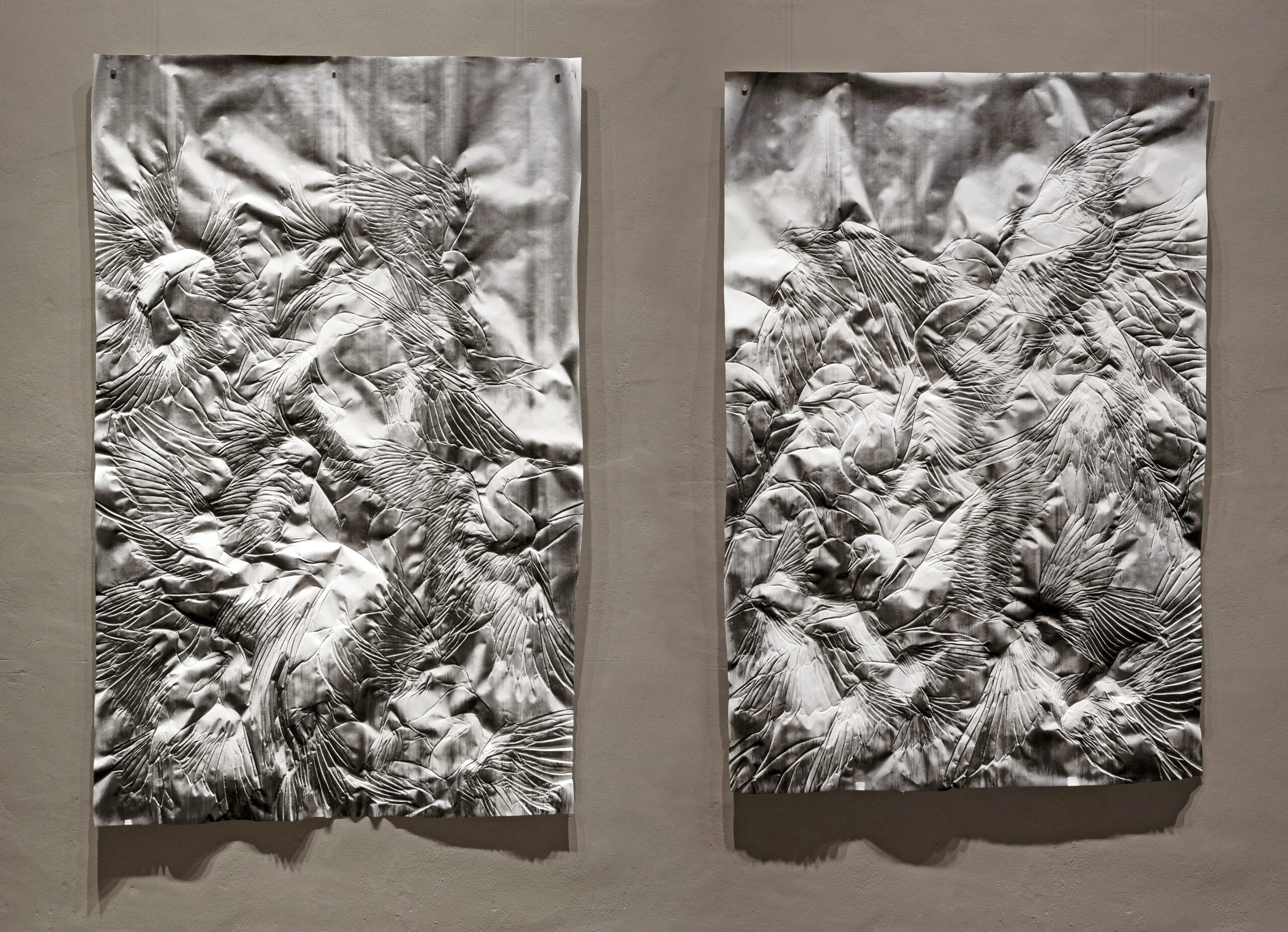
Simurgh 1/2 & 2/2
charcoal on folded paper
140 x 218 cm. / 140 x206 cm. (diptych)
2026
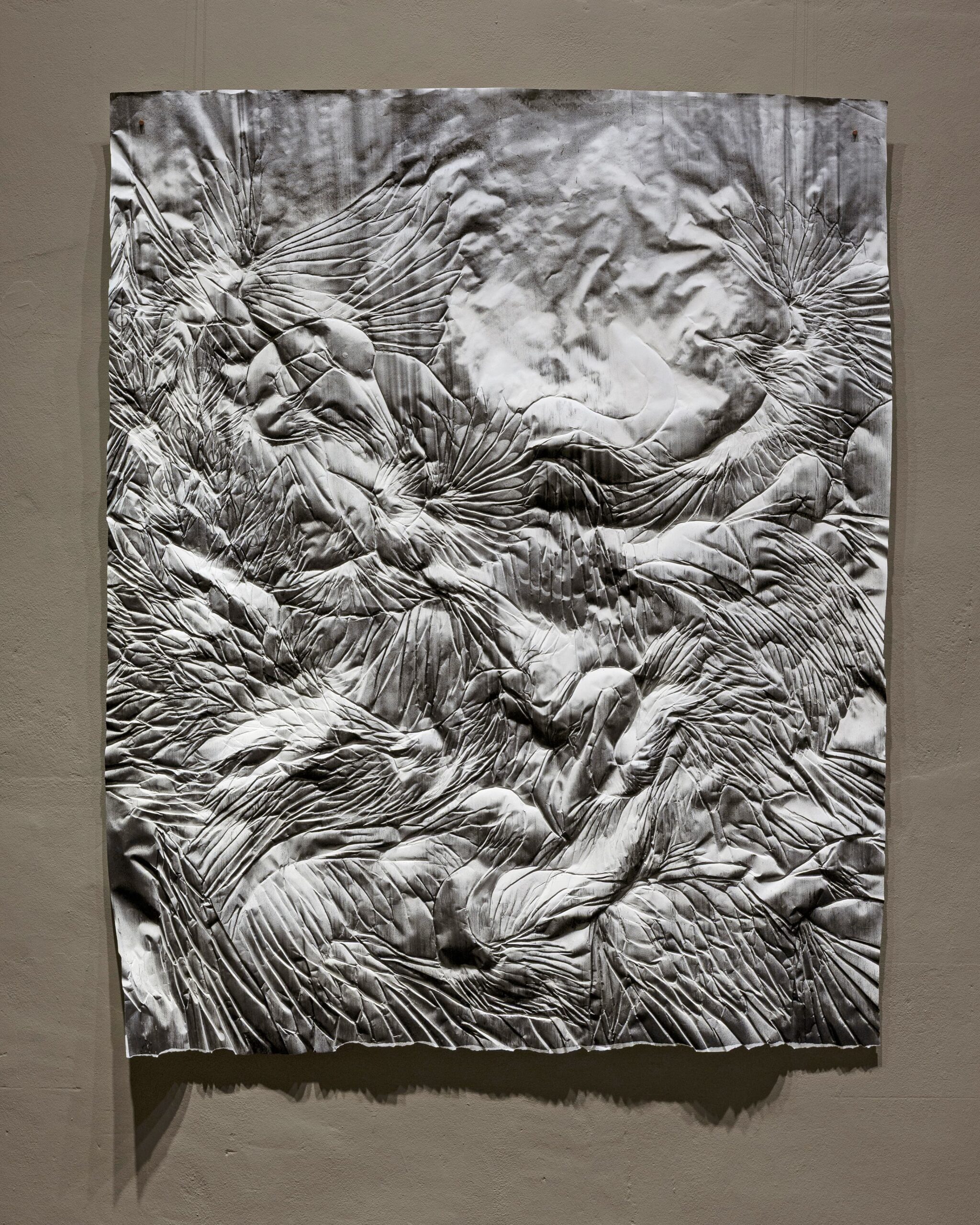
Un lenguaje de pájaros
charcoal on folded paper
135 x 167 cm.
2026
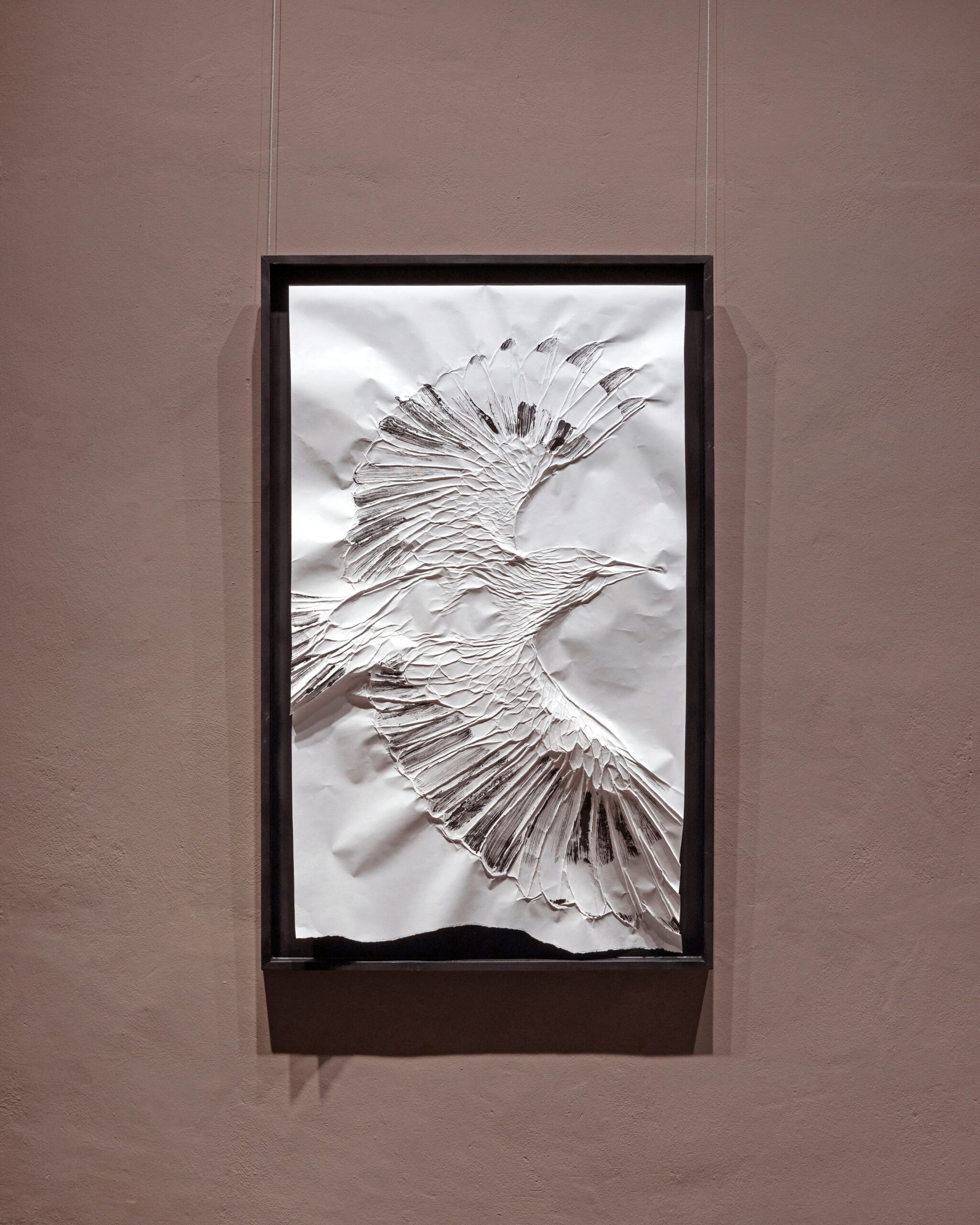
Curruca III
acrilyc on folded paper
74 x 130 cm.
2023
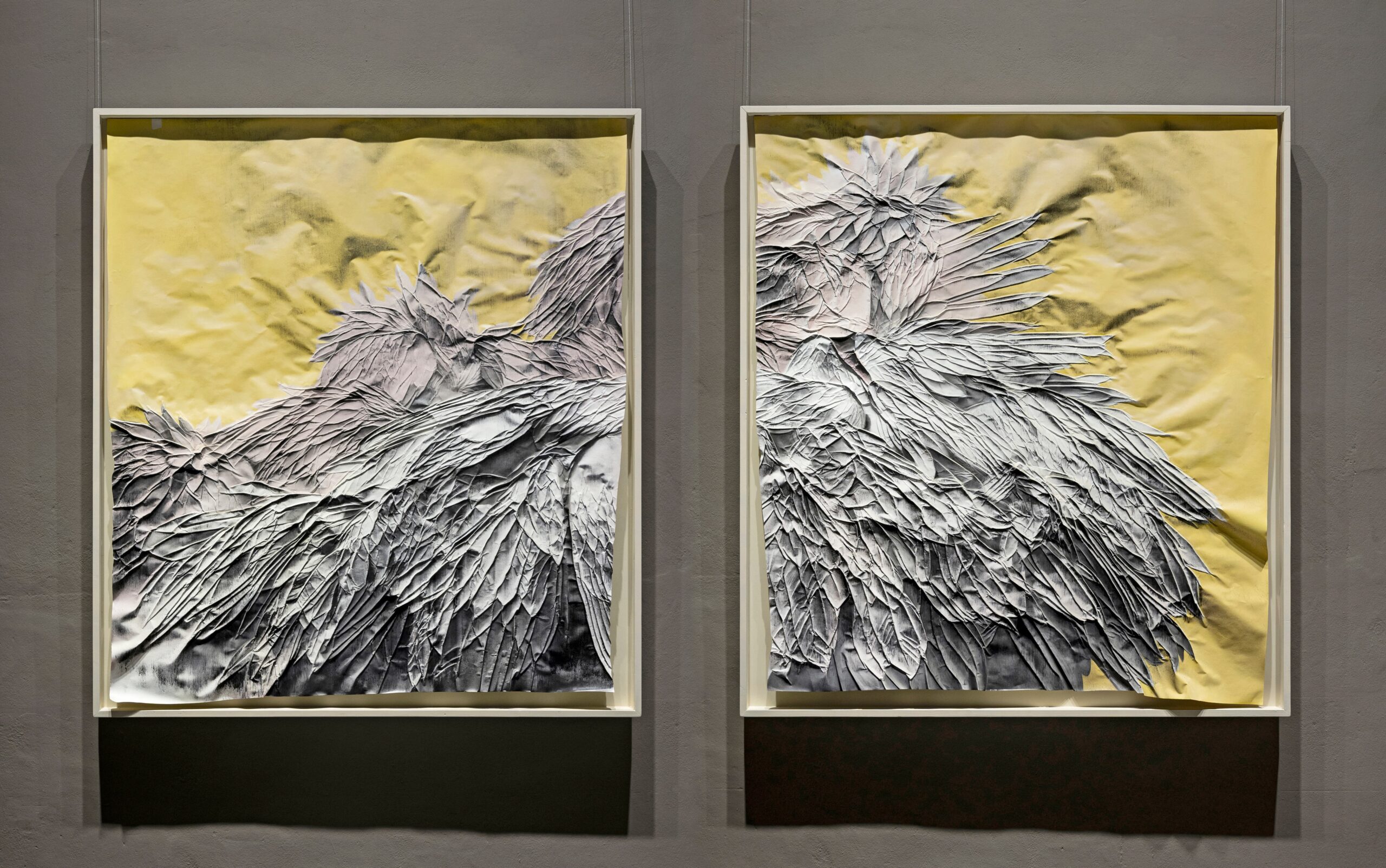
Fulvus Festum IV
charcoal and sprayed paint on folded paper
136 x 155 x 10 cm. X 2 (diptych)
2024 / 2025
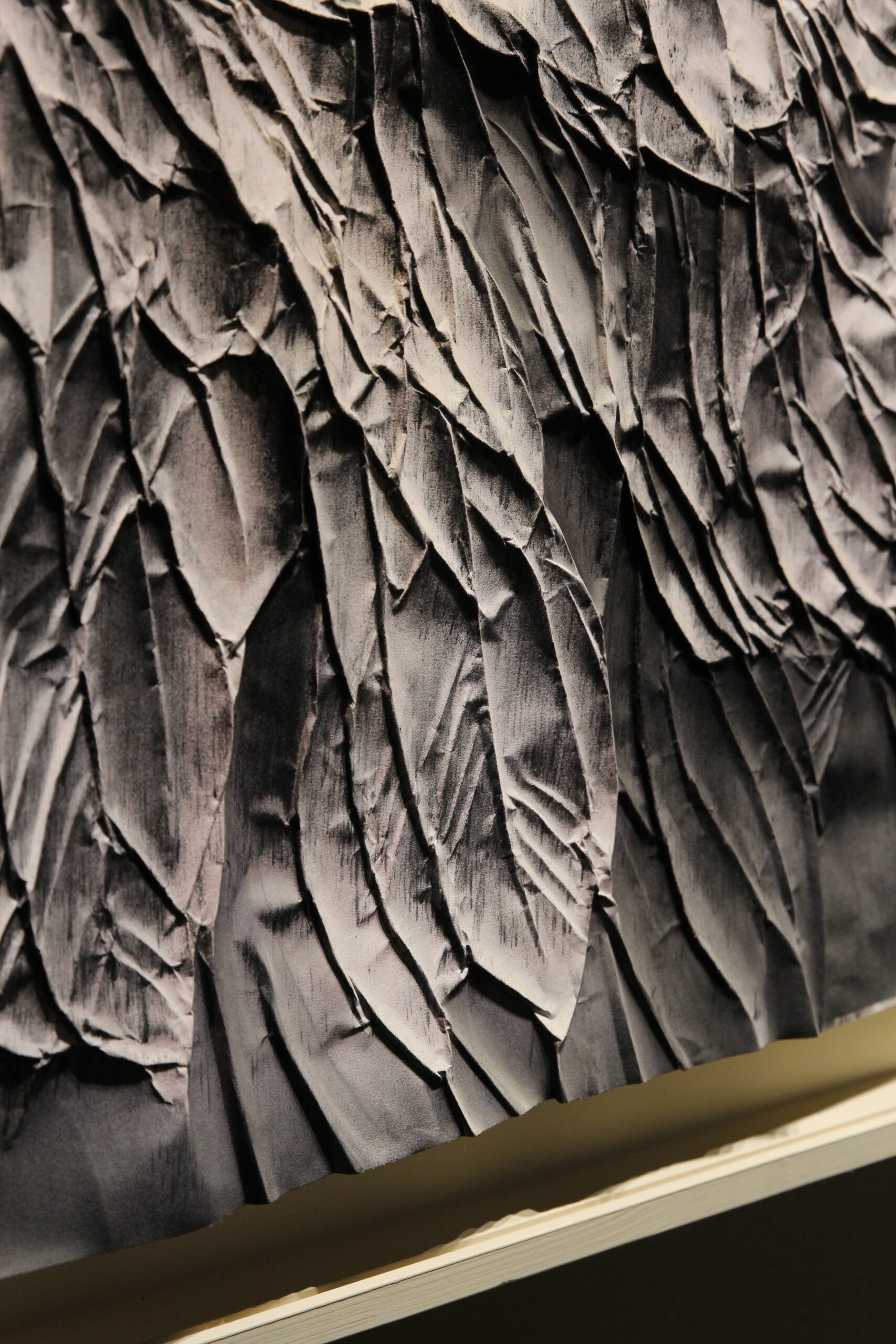
Fulvus Festum IV
perspective detail
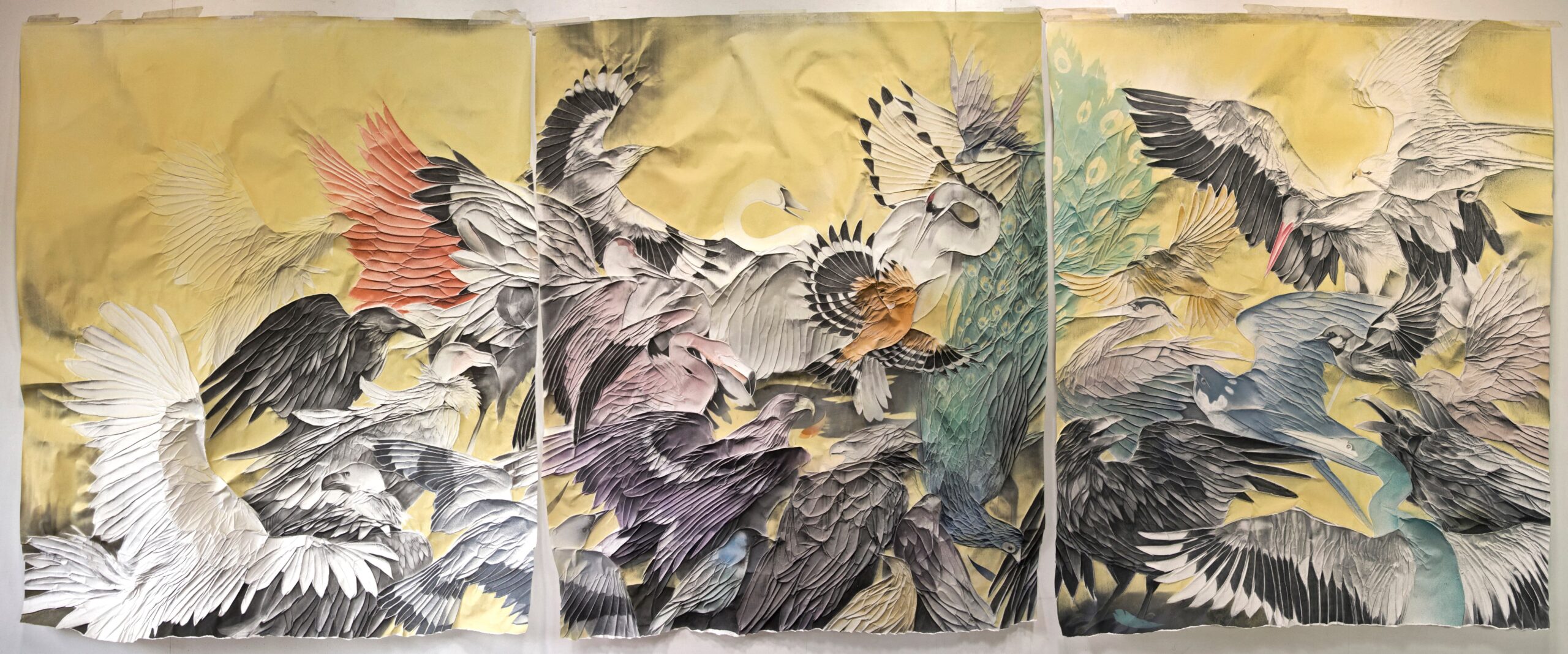
A Conference of Birds I
charcoal and sprayed paint on paper
145 x 167cm. X 3 (triptych)
2025
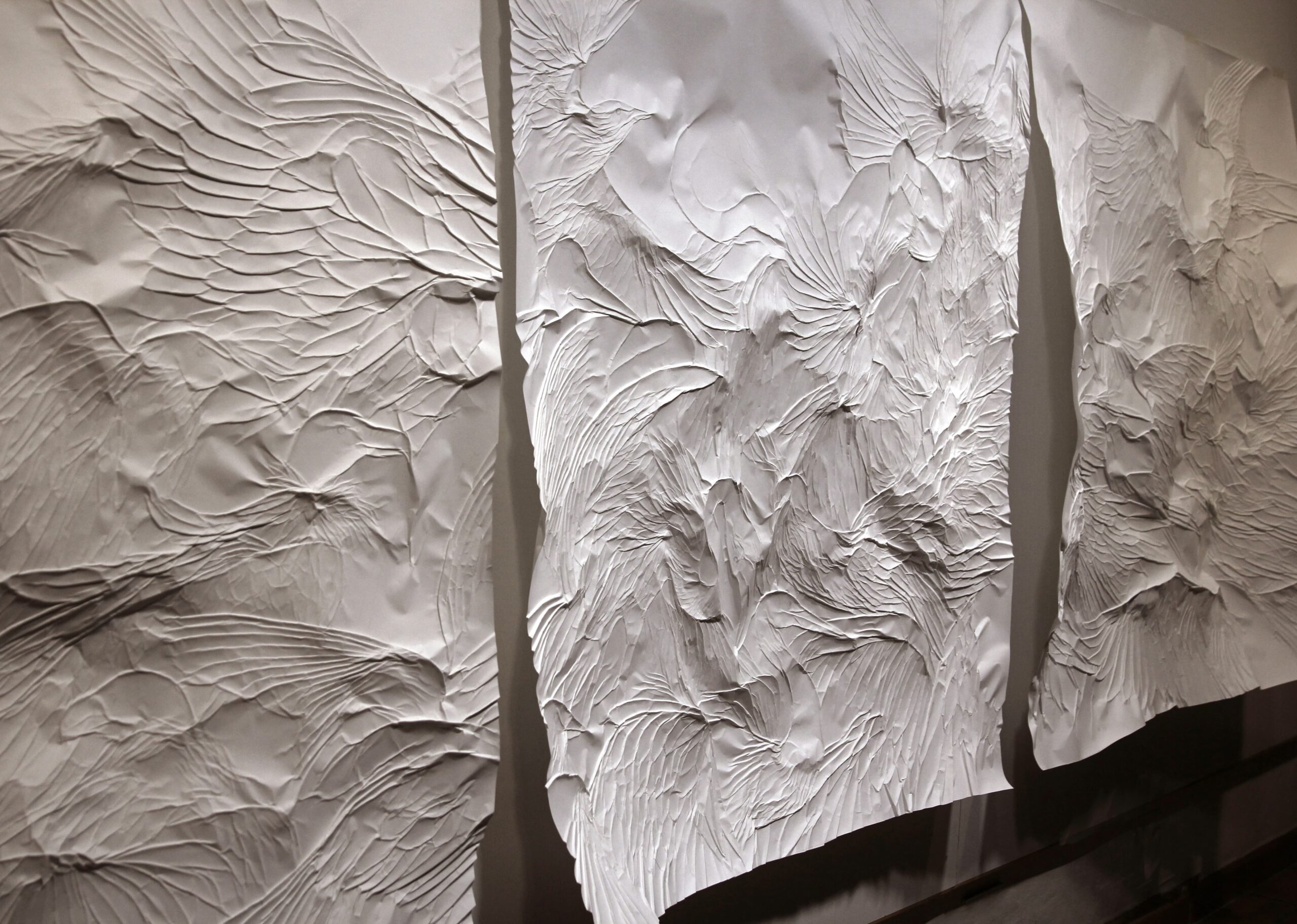
A Conference of Birds I
View of the triptych’s process in artist’s studio
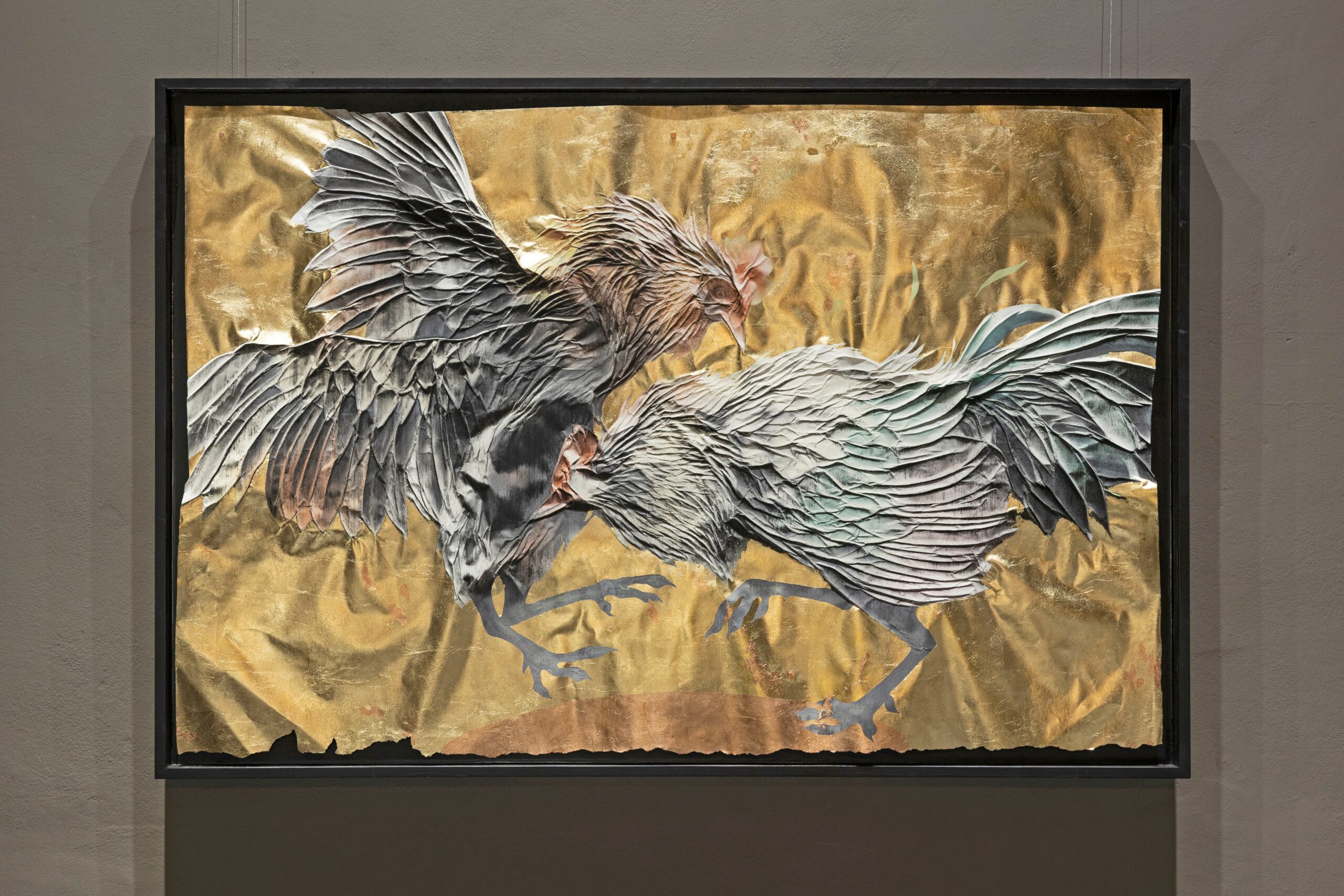
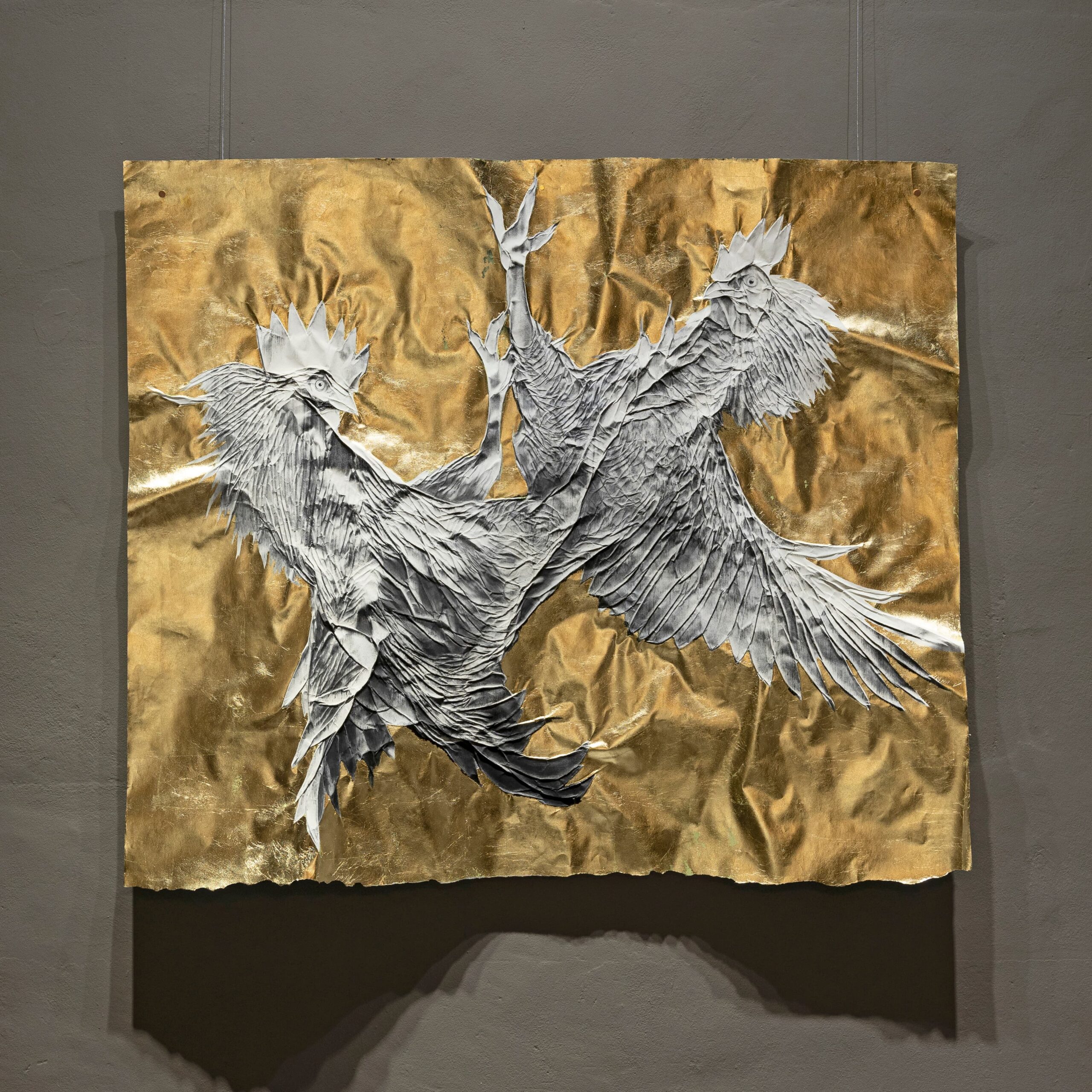
Pugna III
charcoal, acrylic and golden leaf on paper
105.5 × 155.5 cm
2024 / 2025
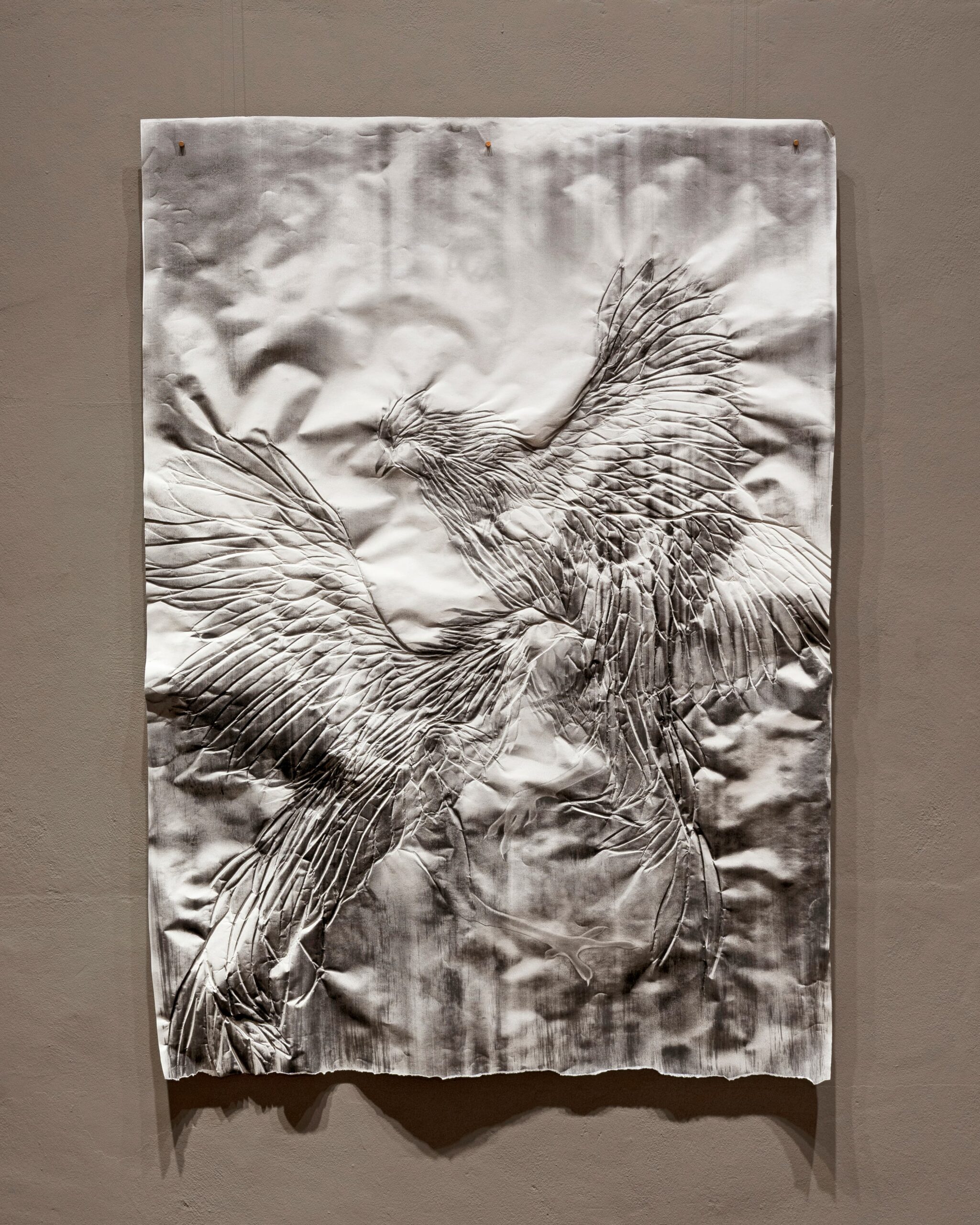
Pugna II
charcoal on paper
107 × 150 cm
2024 / 2025
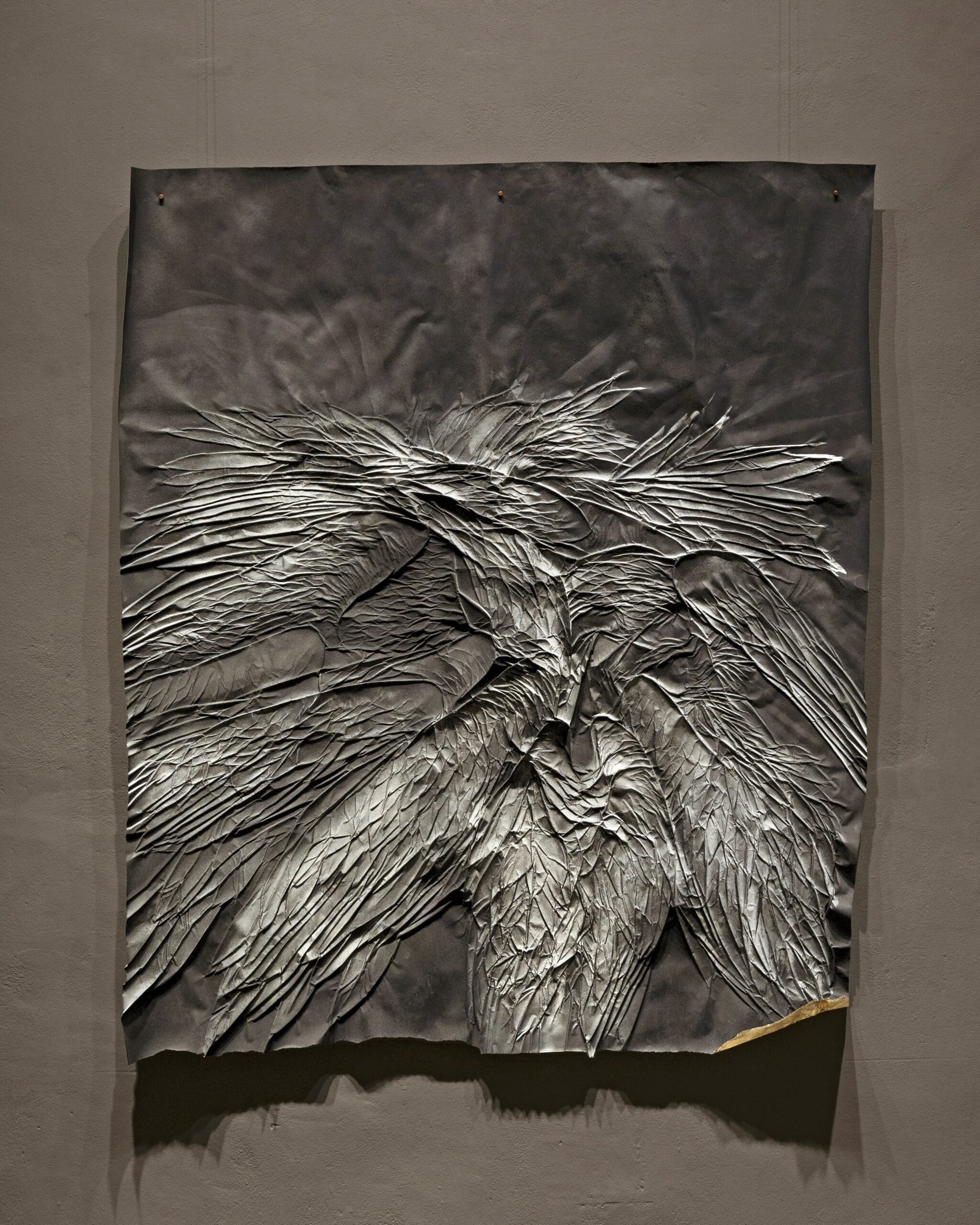
Pugna I
charcoal and golden leaf on paper
145 × 127 cm
2024 / 2025
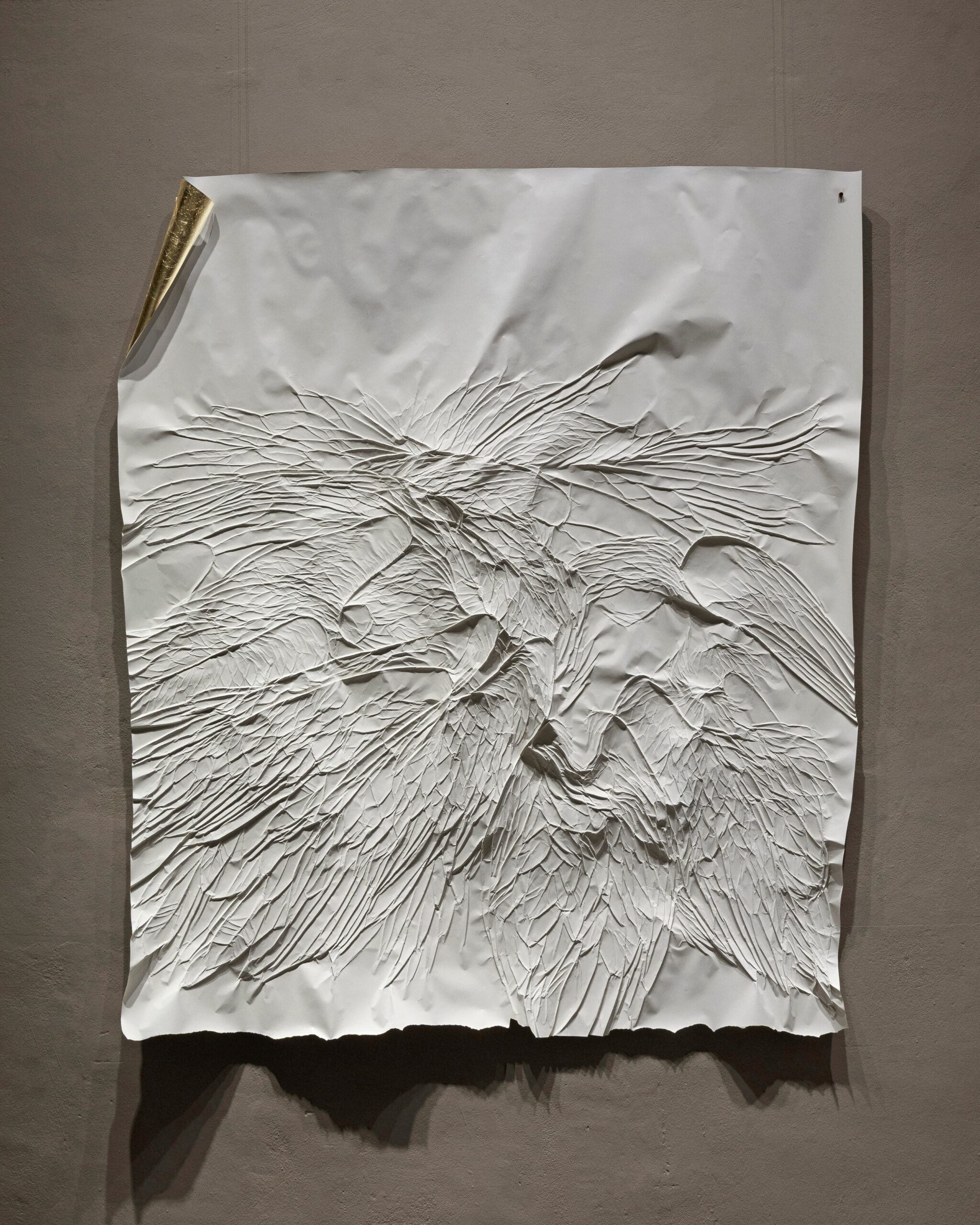
Fulvus Festum II
charcoal and aerosol paint / golden leaf on folded paper
143 × 170 cm
2024
Fulvus Festum III
folded paper /golden leaf
143 × 170 cm
2024
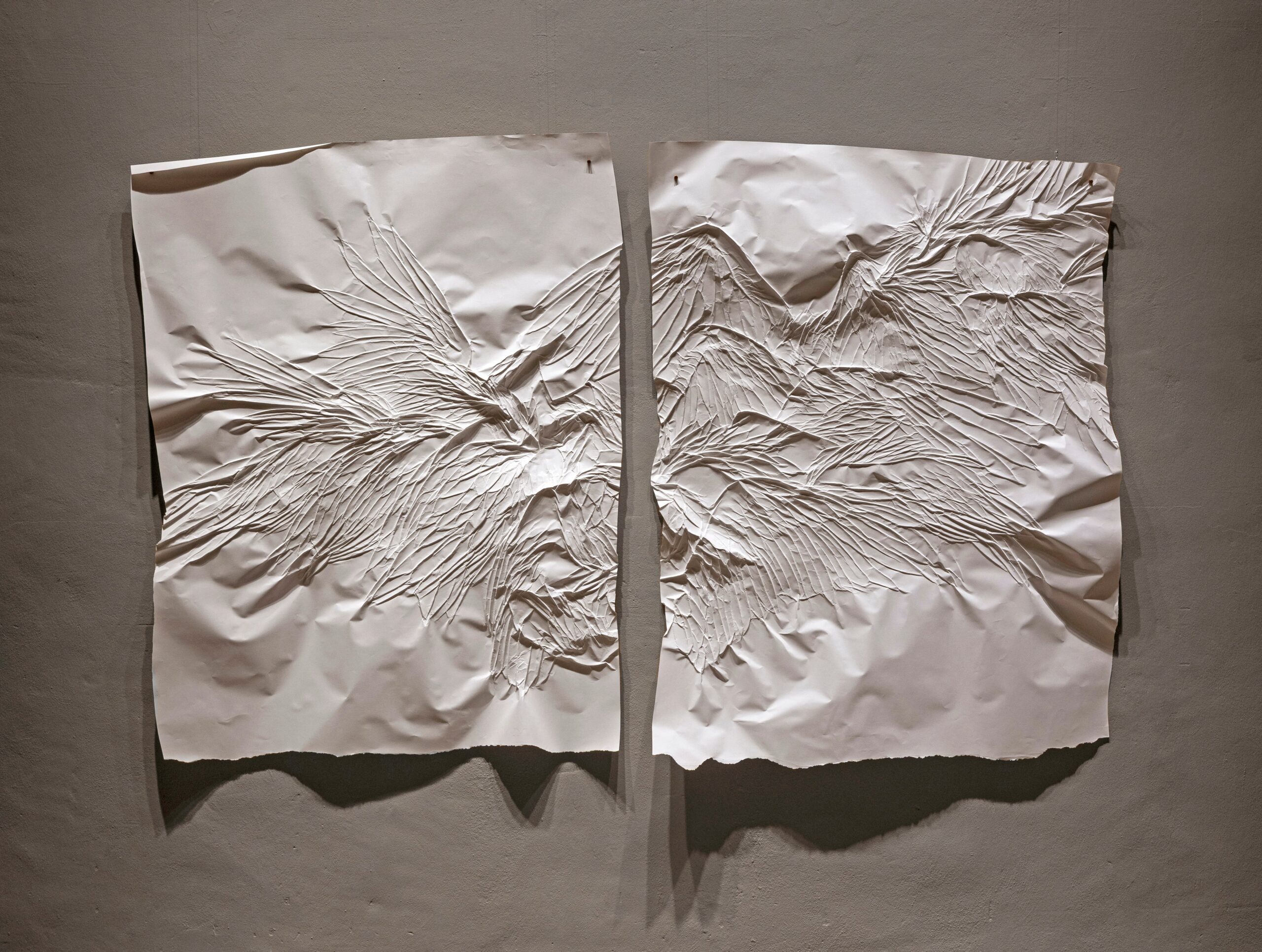
Fulvus Festum I
folded paper and light
106 × 138 cm × 2 (diptych)
2024
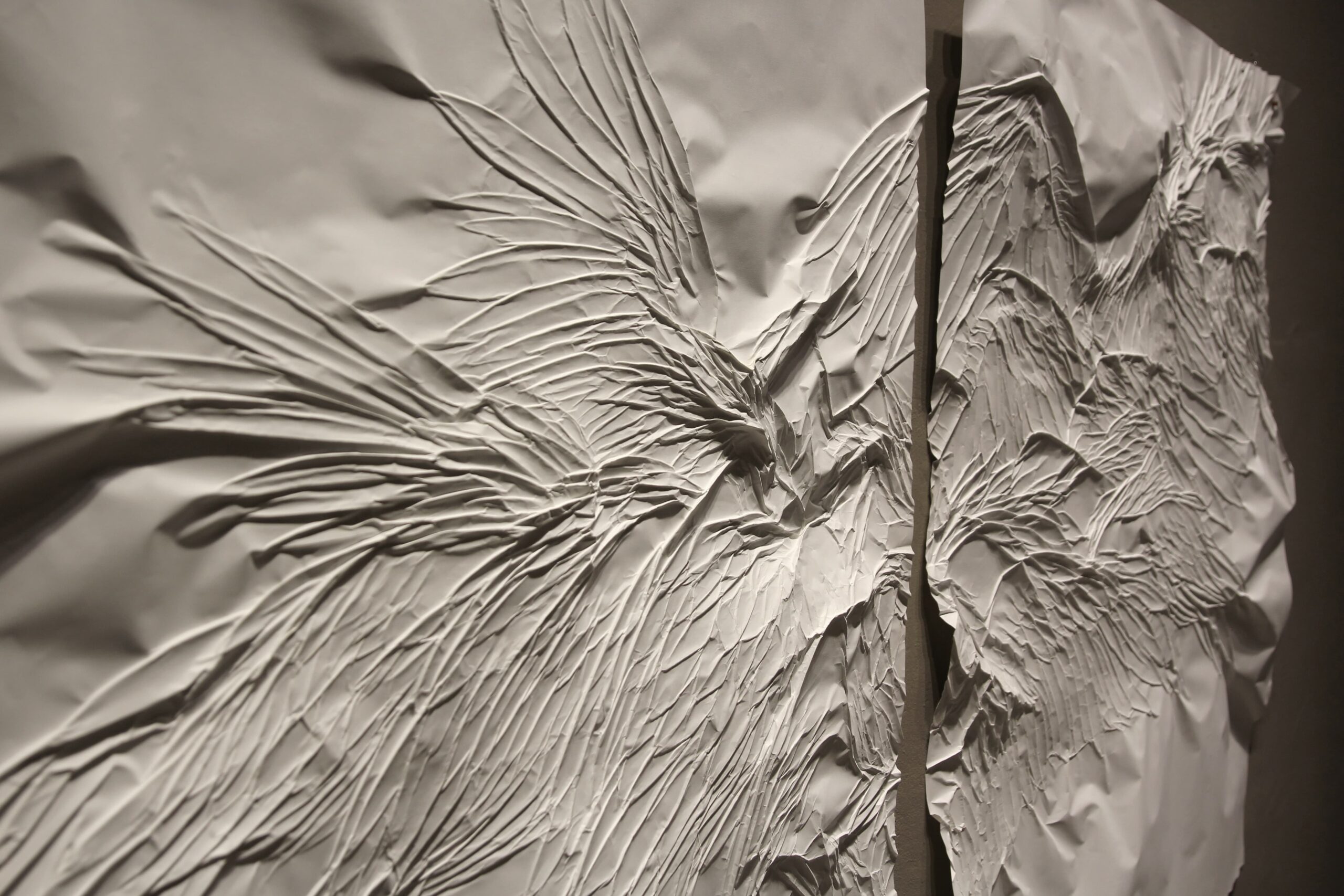
Fulvus Festum I
perspective detail
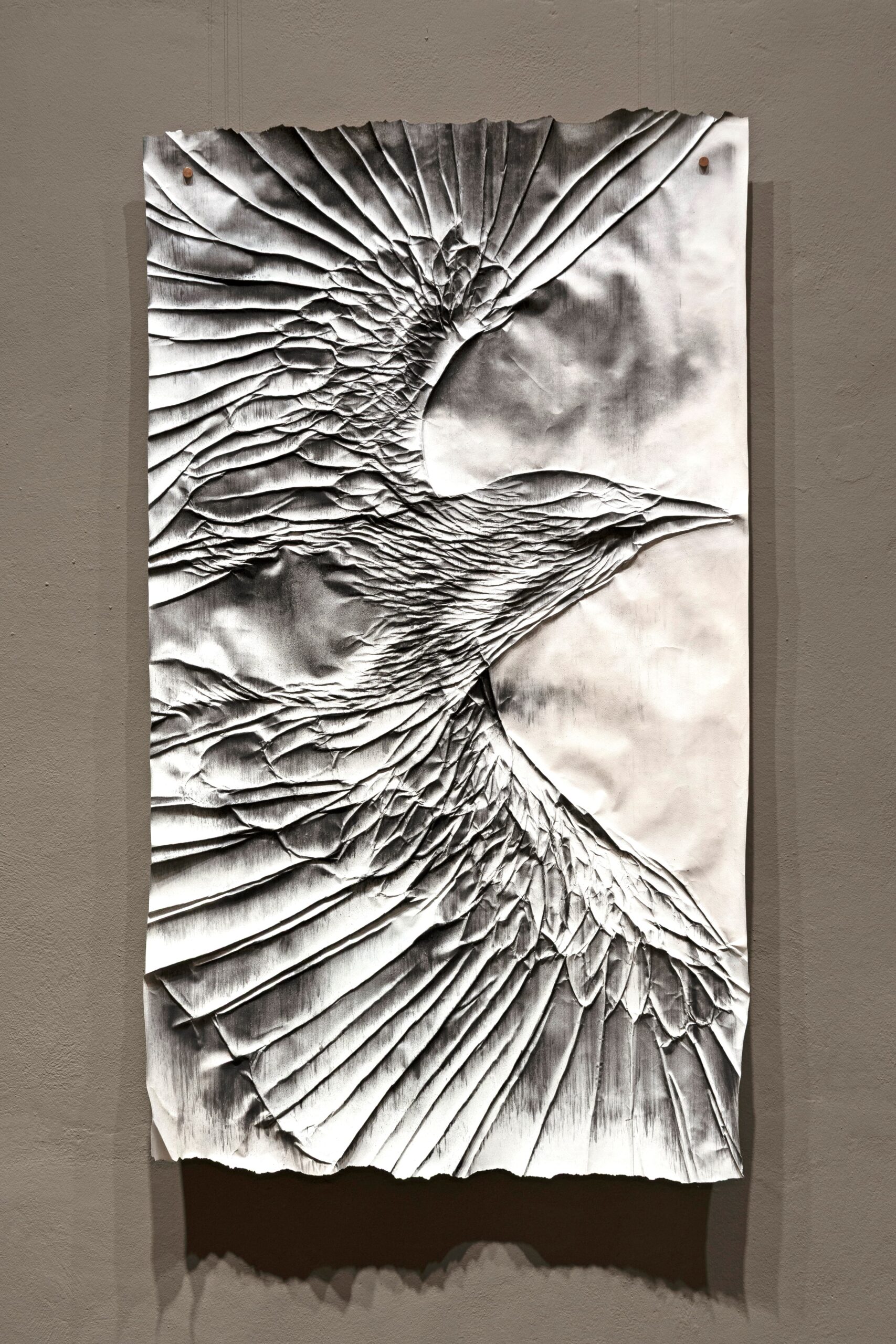
Curruca II
charcoal on folded paper
73 × 127 cm
2023
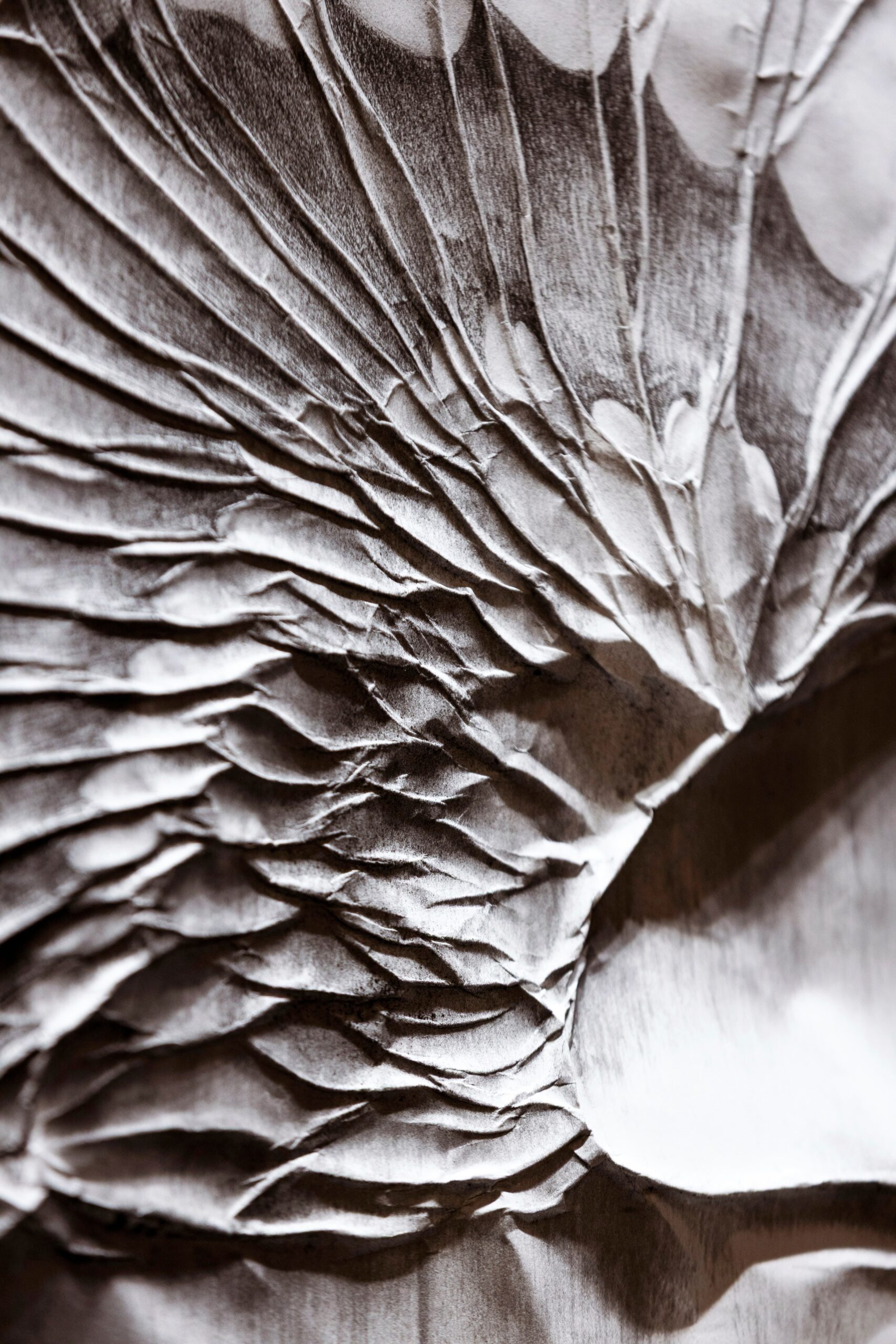
Curruca I
detail
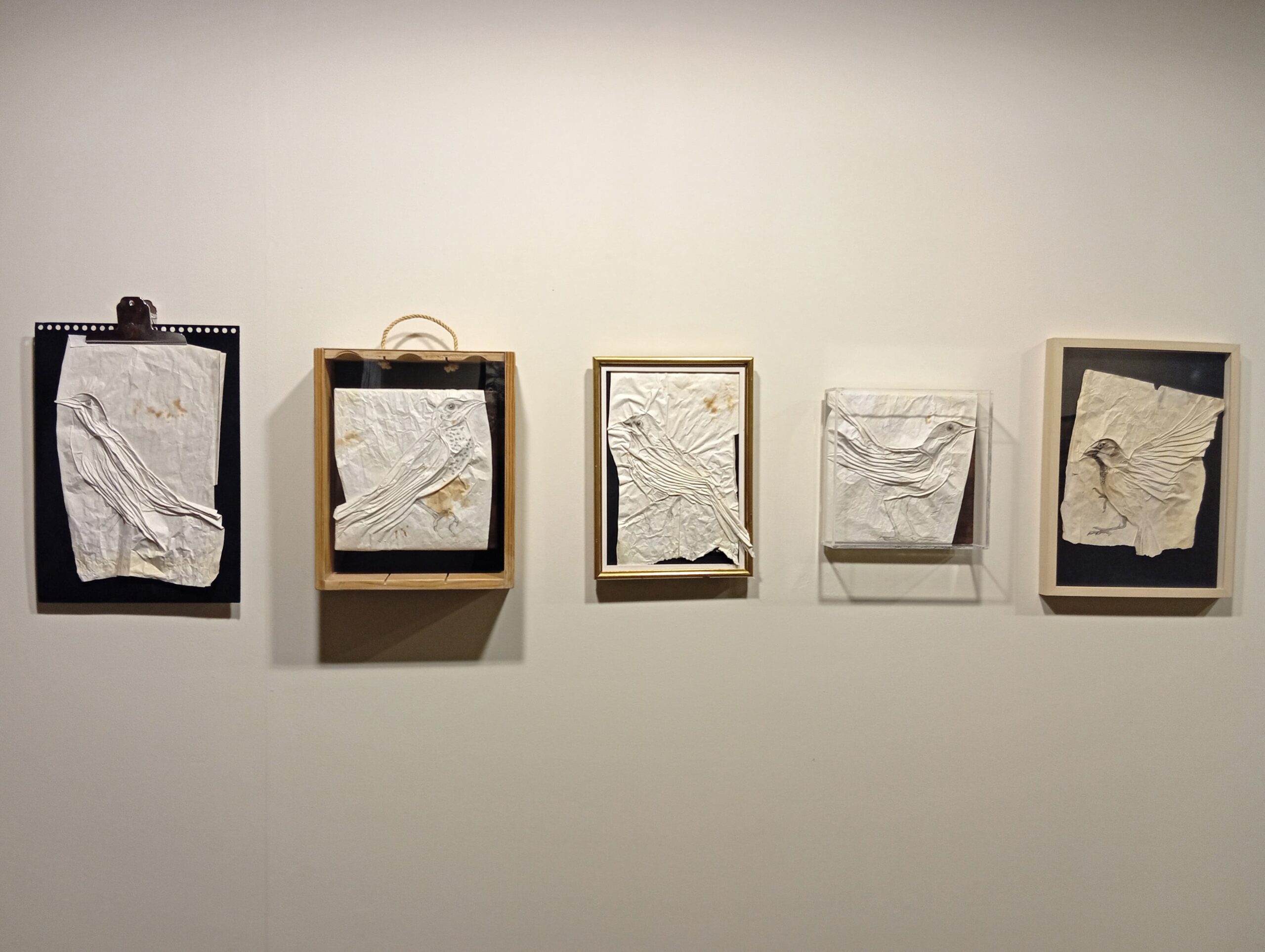
Pajaritos
(little birds)
charcoal and weathering stains on paper used for bagging grapes
variable dimensions
2022
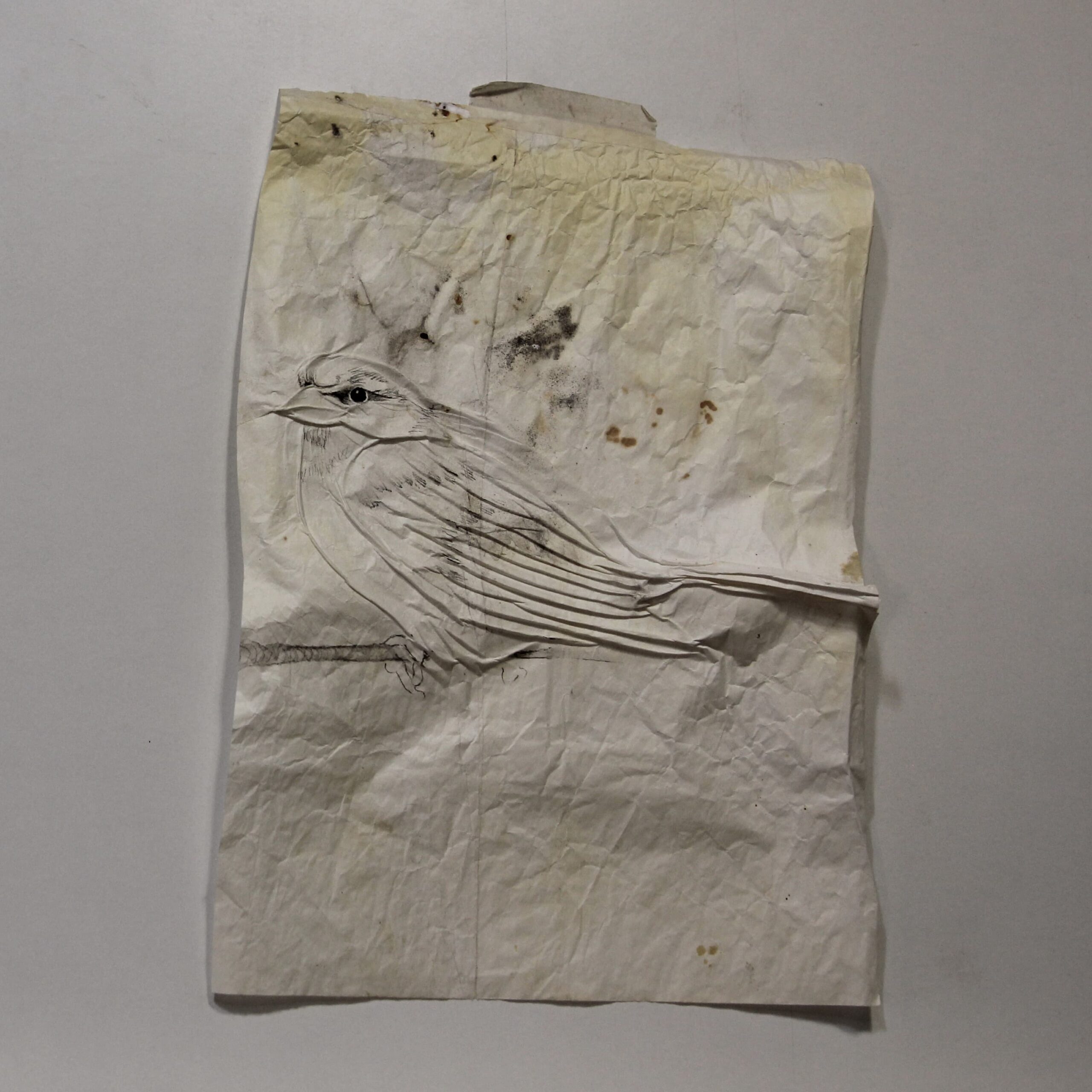
Gorriona
weathering and fruit stains, charcoal on paper used for bagging grapes
21 × 30 cm
2022