
Trama de Pliegues (A Weave of Folds) moves through different subjects in a progression that draws the eye towards the abstract dimension of what is represented. Paper becomes the body of drawing: through its sculptural qualities, the image emerges from the material itself. The title brings the physical weave of folds into relation with a fragmented, partly concealed plot. Traces of lives, intimations of destiny and images of death find a correspondence in a surface that reveals and obscures, where narrative and matter continually reshape one another.
In Paper Portraits, the ages of a lifetime seem to coexist within a single face; in Quiromancia, an elderly woman’s palm bears traces of the past and intimations of an uncertain destiny. Mirlo (falling) and Carroñera depict a fallen bird and an apparently taxidermied one. Their “contemplative dissection” evokes the funerary dimension latent in representation: as memento mori, these images preserve a presence subject to absence. In Zoom, the inquiry extends into material abstraction, where marks and relief become events in their own right. In the “drawings of shadows”, the means are pared back almost entirely to folded paper and light.
Scale, illumination, viewing distance and perspective alter perception. A figure recognisable from afar resolves, at close range, into charcoal deposits and ridges, while pigment can become indistinguishable from cast shadow. Gesture, gravity and chance also shape how the image takes form. Together, these works manifest a desire to reflect the visible world and its uncertainty.
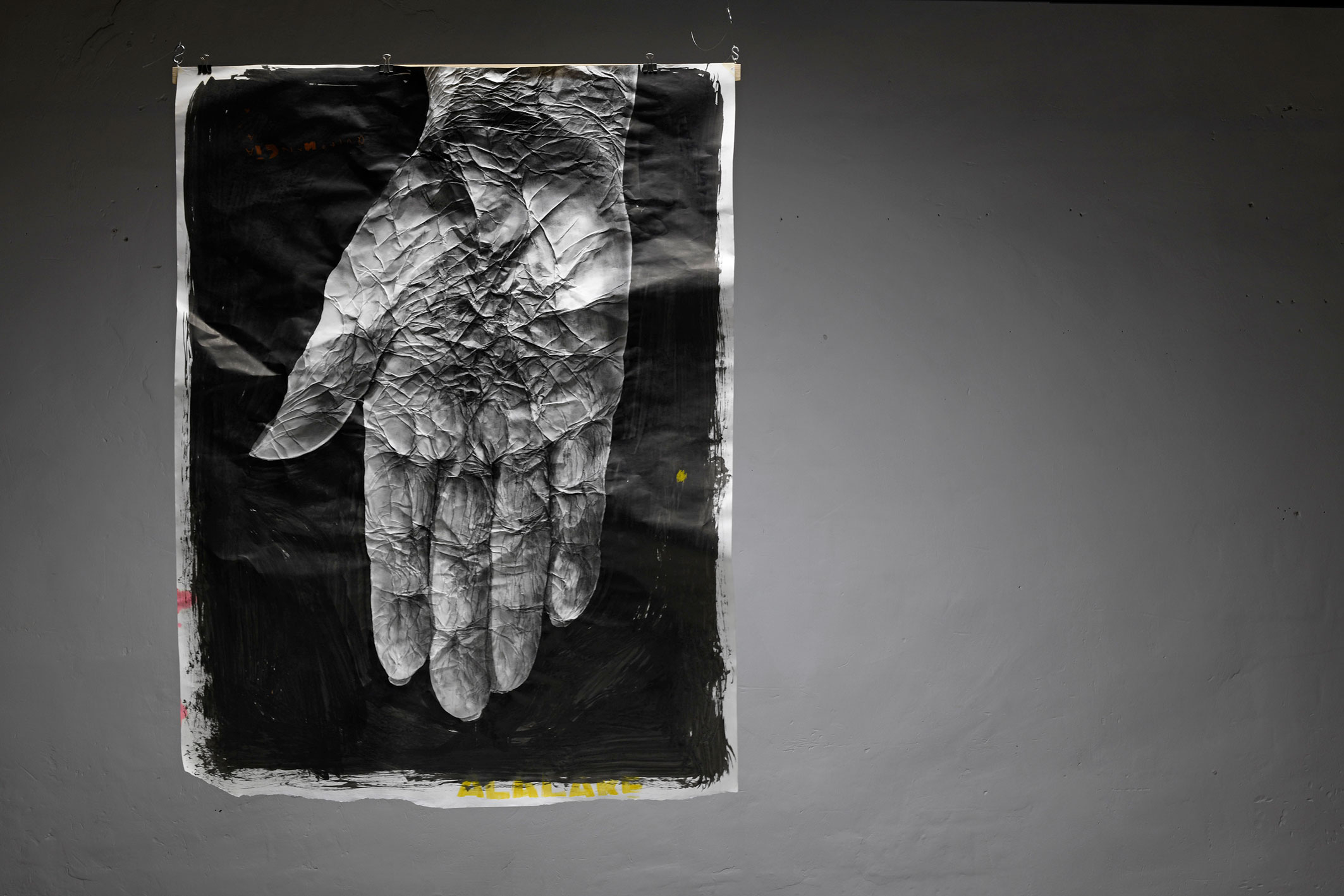
Quiromancia (Concepción)
charcoal & ink on folded paper
105 x 138 cm.

Mirlo (falling)
charcoal and watercolour on folded paper
122 x 126 cm.
2018.

Carroñera
charcoal on folded paper
150 x 145 cm.
2018.
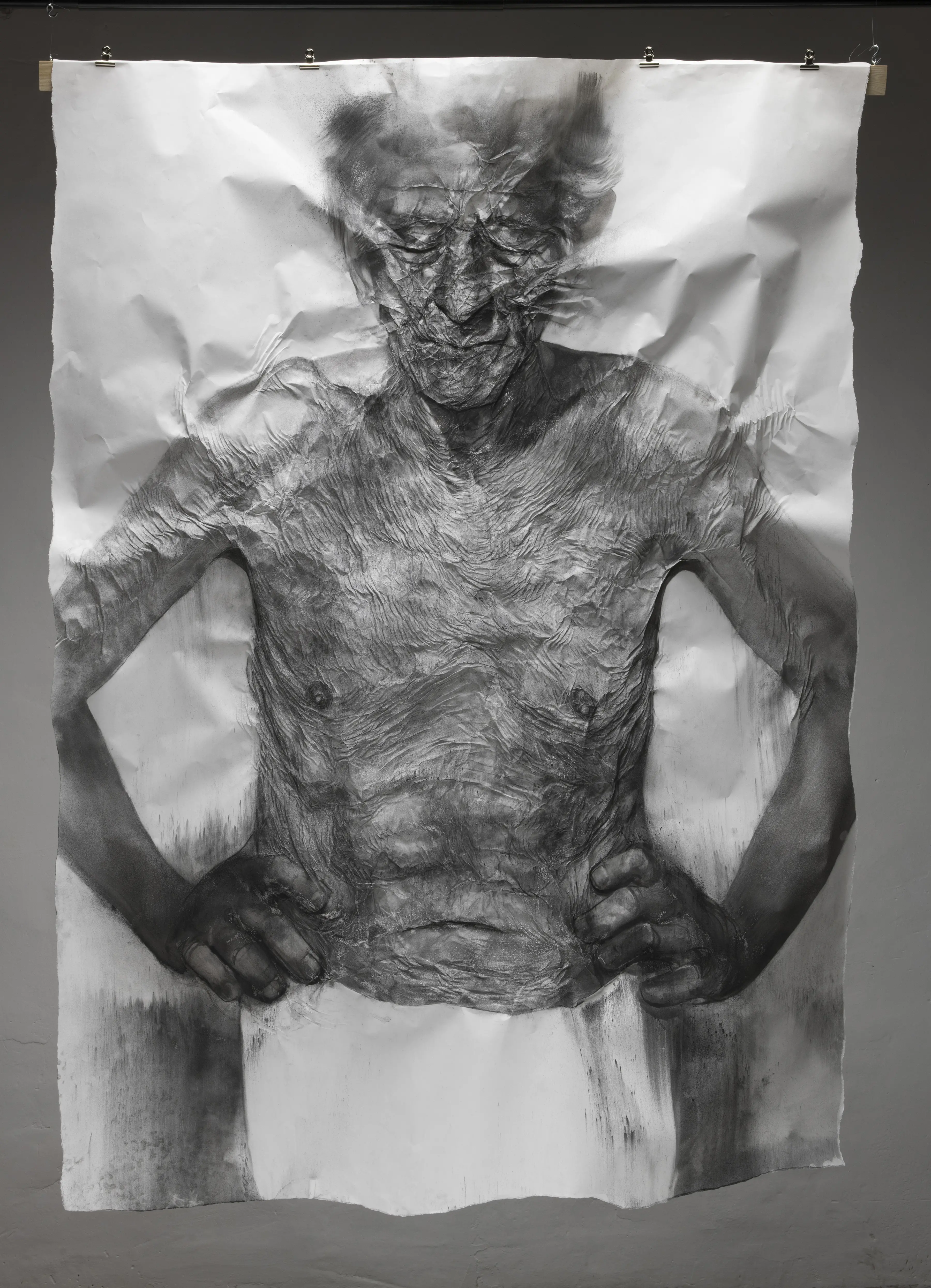
Torso hombre X
charcoal on folded paper
126 x 175 cm.
2018.

Sadhu Mask
charcoal on folded paper
164 x 134 cm.

Zoom I
charcoal on paper
100 x 100 cm.
2015.

Zoom II
charcoal on folded paper
132 x 142 cm.
2018.
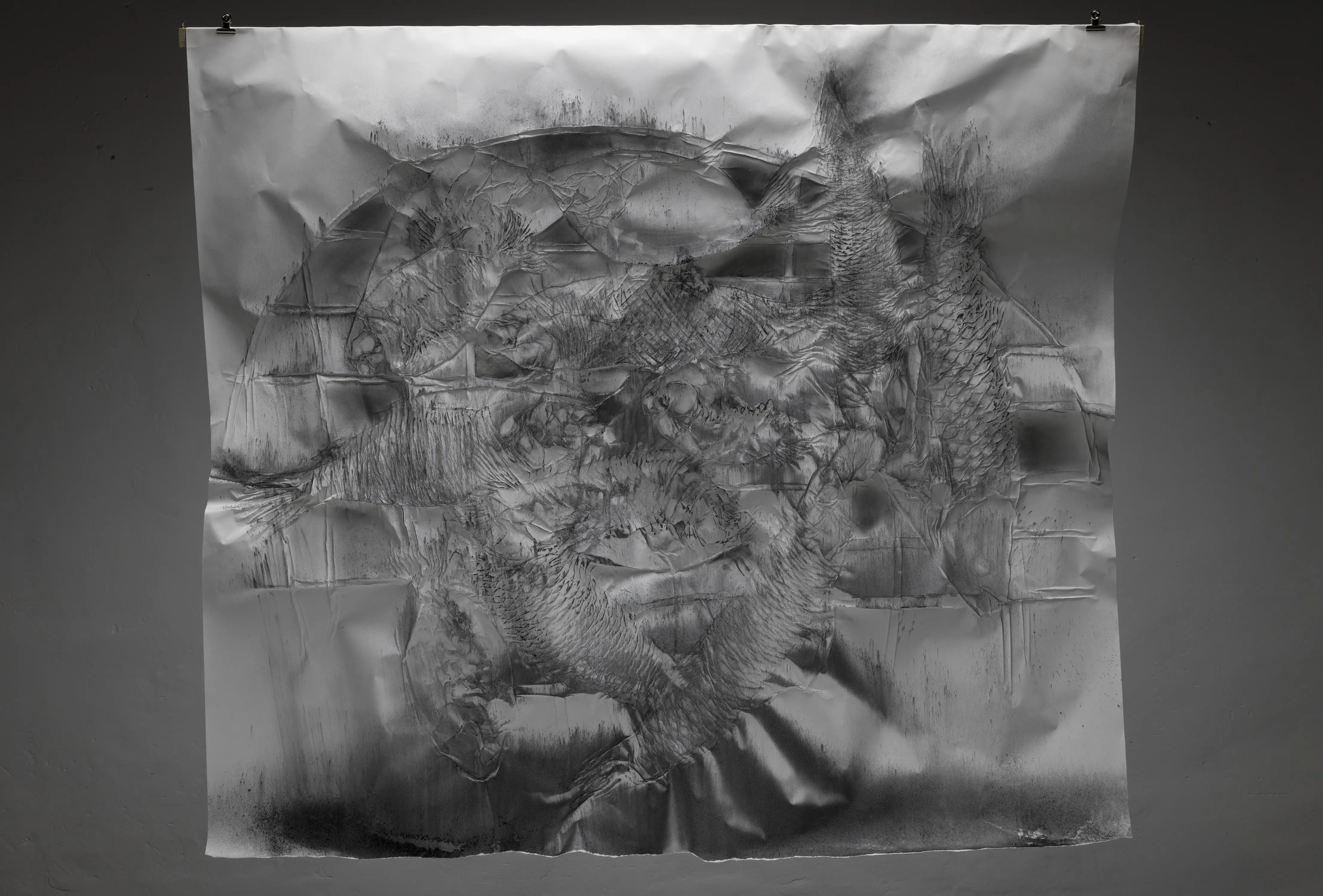
Estudio de brasas
(Imiria)
charcoal on folded paper
148 x 129 cm.
2018.
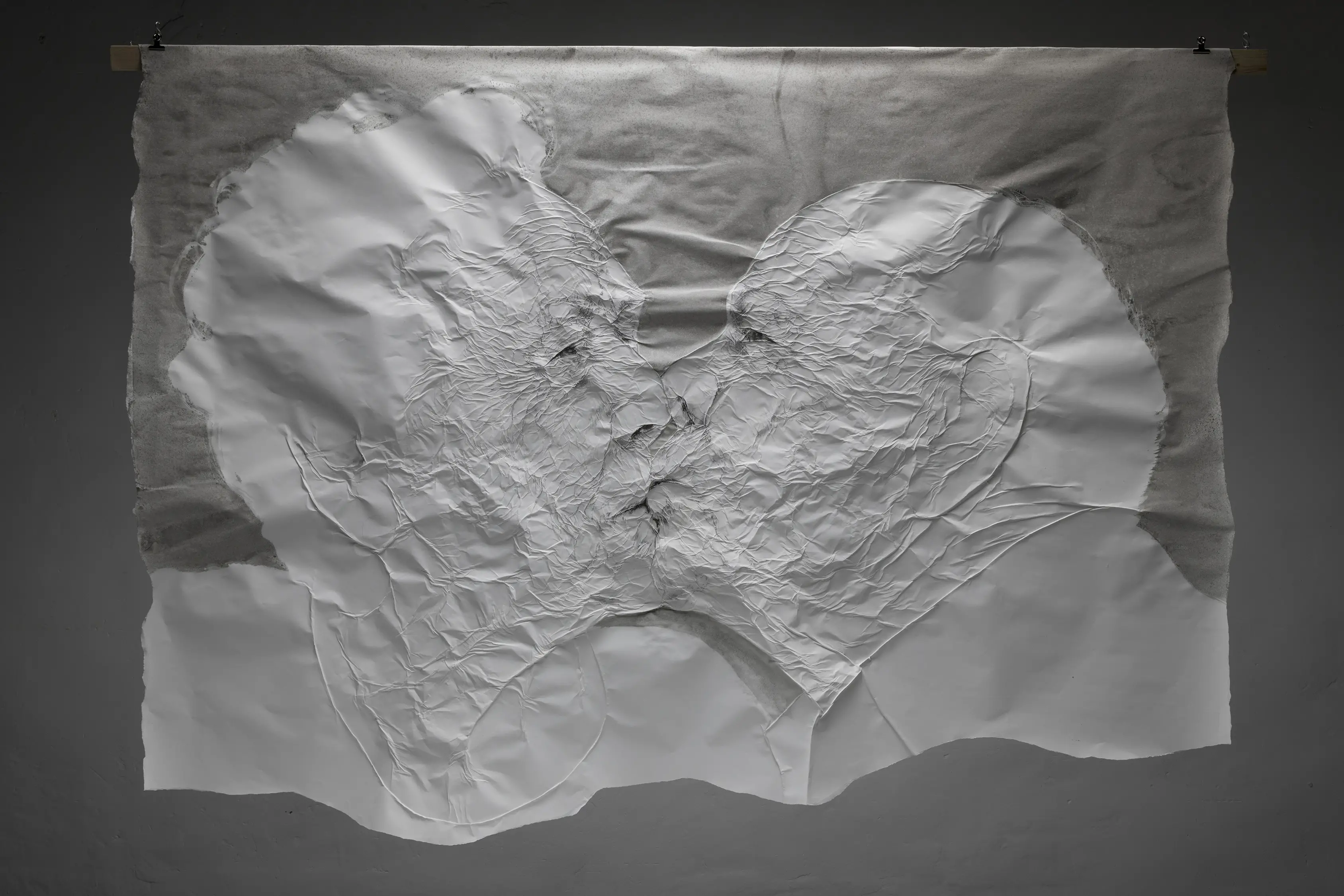
Beso Largo
(Long kissing)
charcoal and ink on folded paper
200 x 135 cm.
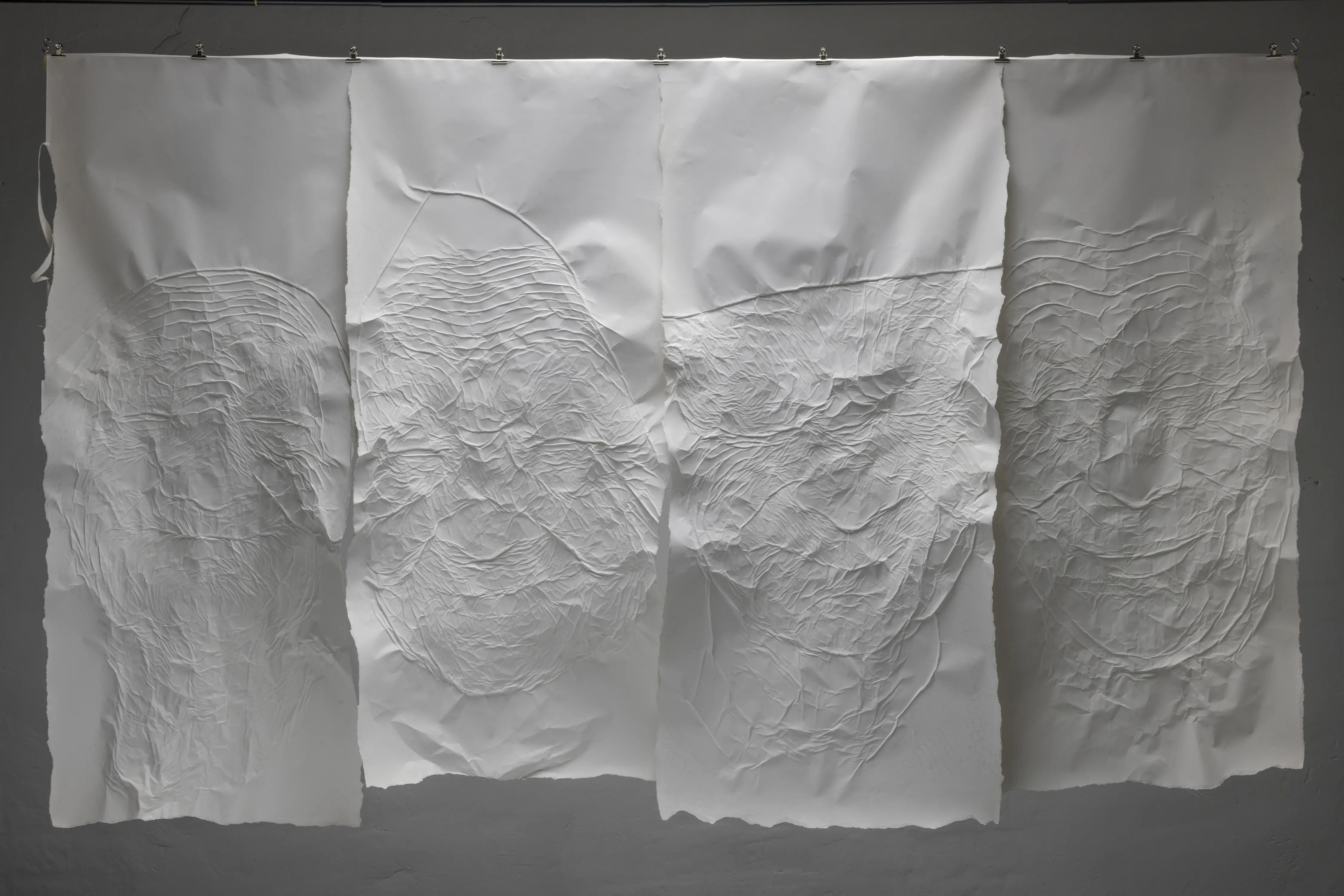
Retales
paper / light
242 x 152 cm.
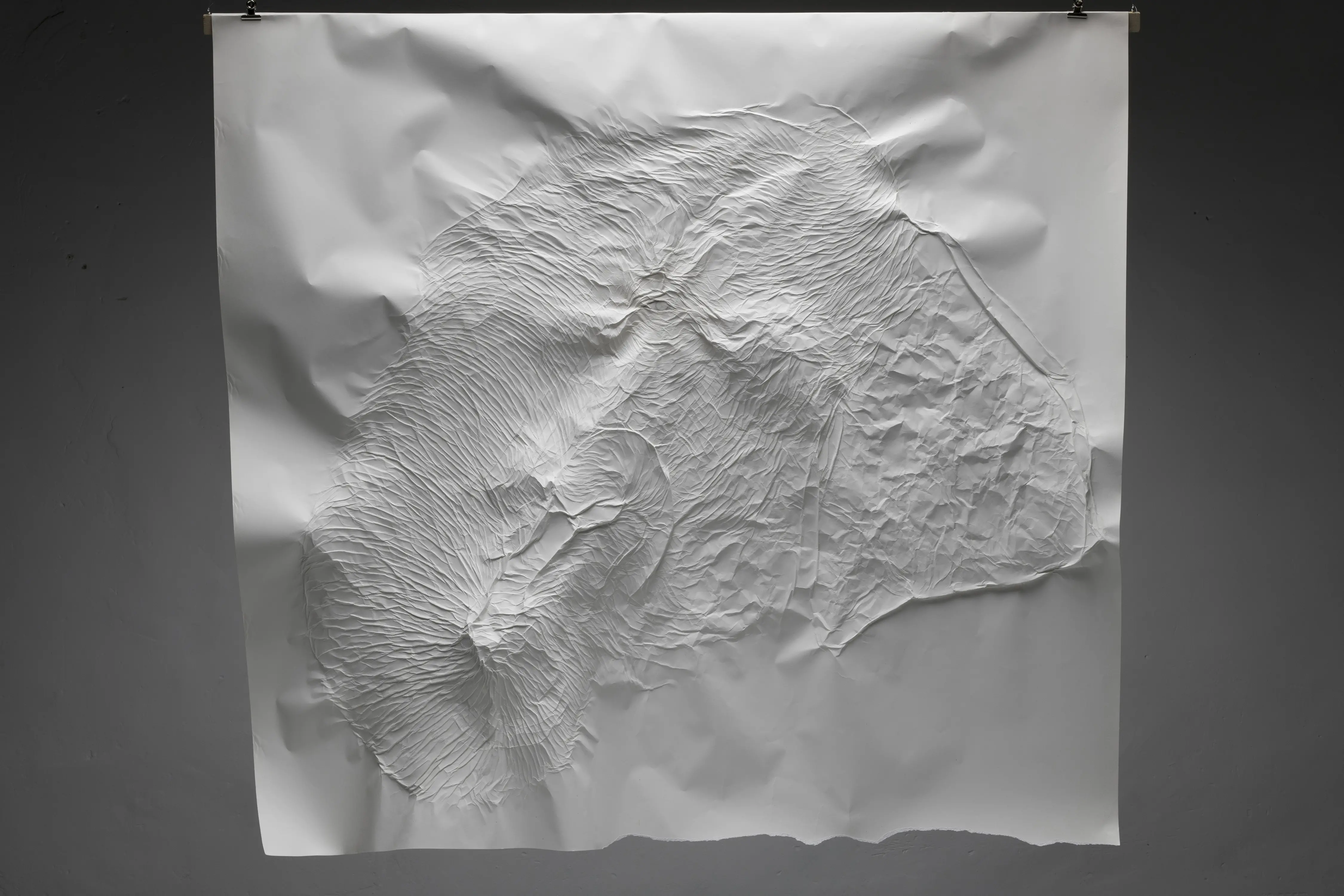
Haathee
folded paper / light
140 x 129 cm.